
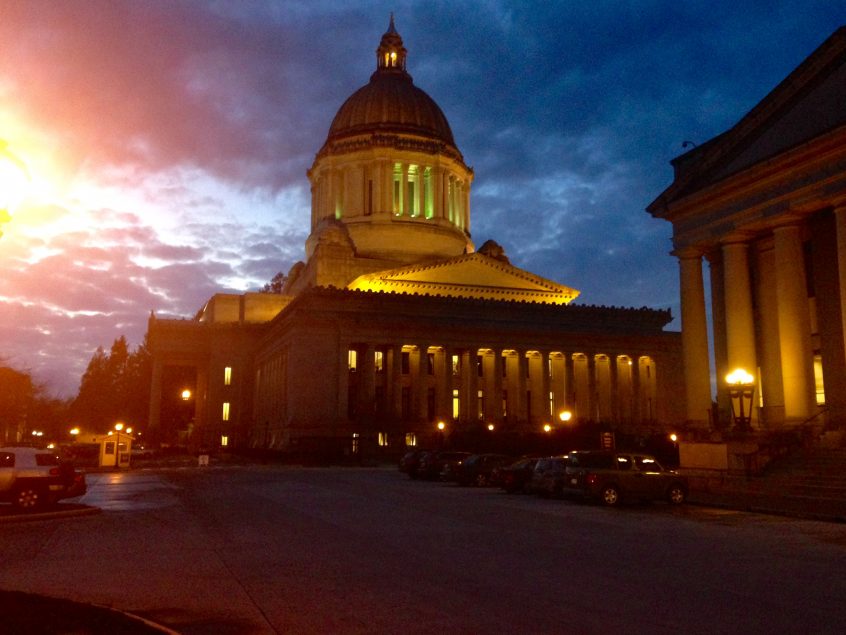
The 2026 Washington state legislative session concluded on Thursday, March 12th after a packed 60-days. Lawmakers approved final budgets, including an $80.2 billion operating budget and a new state income tax on households earning over $1 million. Governor Ferguson has until April 4th to sign or veto 2026 legislation.
Capitol dome at sunset.
Though the session ended on time, the policy and fiscal debates were anything but simple. The operating budget may be technically balanced, but it relies heavily on one-time budgeting maneuvers and new revenues that are likely to face legal and political challenges. That raises legitimate questions about long-term sustainability, and the likelihood of budget shortfalls legislators will have to address in upcoming sessions.
The biggest news to come out of the session was the new income tax, which is one of the most controversial bills in recent memory. Tens of thousands of Washingtonians voiced their opinions on the bill over the course of session, and there was even a record 25-hour-long debate on the bill on the House floor in the closing days of session. The bill is likely to be challenged in both court and the ballot box.
For the Washington Forest Protection Association (WFPA), the session was challenging but ultimately productive. If we were to use one word to describe this year’s session, it would be vigilance, because the 2026 session proved to be a defensive session for working forests.

Rep. Tom Dent, R-13
WFPA entered the session facing several serious concerns, including proposals that could have created new burdens for working forests, timber-dependent communities, and the broader forest products sector. Thanks to strong advocacy from WFPA’s government relations team, members, and allied partners, many of the more questionable bills were either stopped or improved.
Equally important, WFPA achieved several wins, most notably helping to secure full funding for wildfire mitigation efforts, preventing the advancement of proposals that would have added new burdens on working forests, and strengthening bipartisan relationships with legislators and policymakers for future collaboration.
Several high-profile bills affecting forestry and environmental regulation drew close attention this session. Some bills WFPA supported, while others we identified as harmful. Bills of note include:
- HB 2620 would have repealed the 2025 Np rule, which governs protections for non-fish perennial streams. WFPA used the hearing to raise concerns about the Forest Practices Board’s (FPB) process and the long-term effects on Forests & Fish. We appreciate Rep. Tom Dent (R-Moses Lake) and his bipartisan co-sponsors for highlighting this issue.
- HB 2170 proposed authorizing ecosystem services on state and county trust lands. WFPA and others opposed the bill due to concerns that it would reduce state timber harvests, which would have negative impacts on the larger working forest economy, trust land beneficiaries, and overall forest health.

Rep. Kristine Reeves, D-30
- SB 5360 proposed felony-level penalties for environmental violations. WFPA, labor, and business opposed the bill, which was ultimately defeated, marking a win for the forestry sector and anyone that operates on any working lands.
- Though it didn’t get a hearing during the short legislative session, it’s worth mentioning HB 2682 since WFPA will be participating in a HEAL Act stakeholder workgroup in the coming months. HB 2682 would have mandated the FPB to apply the HEAL Act to its rulemaking, requiring consideration of community, socioeconomic, health, and environmental impacts. Though the bill did not advance, WFPA looks forward to continued work with legislators and other stakeholders, especially given how policies affect rural communities reliant on the forestry sector. Thank you, Rep. Kristine Reeves (D-Federal Way) and bill sponsors, for recognizing that socioeconomic factors – especially in rural communities and small taxing districts dependent on trust land harvests to fund community benefits like schools, public safety, and other critical programs – must be considered in policy and rulemaking.
- One of the clearest positive outcomes was the Legislature’s support for wildfire response and mitigation funding. The final budget includes the full $60 million needed to implement HB 1168, which lawmakers passed in 2021 to fund forest health, wildfire mitigation, and community resilience efforts. At a time when wildfire and forest health remains one of the most urgent challenges facing Washington, that investment is essential to safeguarding lives, property, and the environment.
Though the 2026 legislative session was marked by contentious debates, it also created opportunities for meaningful WFPA engagement and relationship building with lawmakers. Looking ahead, future success will rely on coordinated advocacy, strong partnerships, and persistent engagement. WFPA helped stop harmful policies, improve problematic proposals, and sustain engagement to ensure Washington’s working forests remain working.