The Art and Science of Timber Harvesting
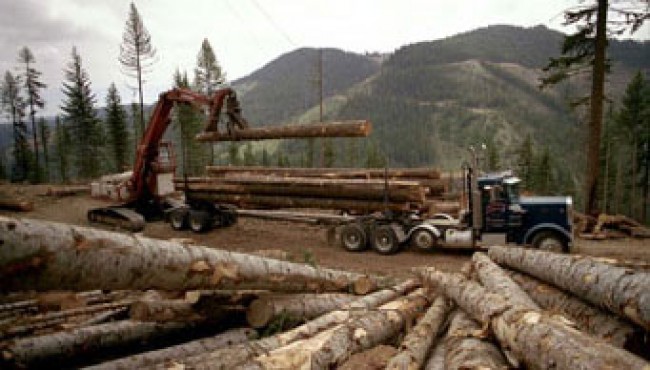
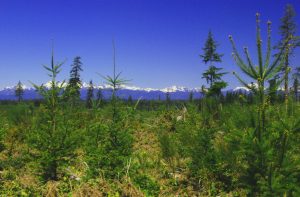
After about five decades of growth, a reforested area is ready for timber harvest. Most harvesting in private forests today is practiced in second-growth forests planted 50 to 60 years ago by timber companies who look to reinvest in the future. Today's foresters carry on that tradition. Through science-based research and adaptive management, both foundations of 21st century forestry, WFPA's members are finding ways to scientifically identify and implement sound harvesting methods as they become known.
Designing for a Timber Harvest Requires
Extensive Planning
Planning for and designing a timber harvest is a sophisticated, complex undertaking for today's private forest landowners. WFPA's members work with the Washington State Department of Natural Resources to comply with all state laws, as well as contribute to the high standards of responsible forest management by sharing forest practices with each other. Harvest units are often planned several years in advance and take into consideration the condition of the site, new information about protection of the environment and market conditions.
Timber Harvest Planning Considerations |
||||
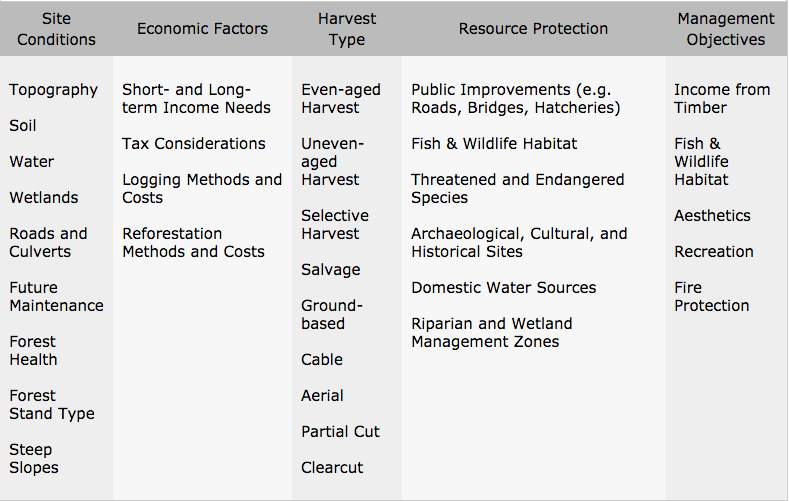
A timber harvest on private forestland requires a forester to listen to the voices and perspectives of the many stakeholders involved. Below is a list of some of the areas to be considered before harvesting takes place. |
||||
| Site Conditions | Economic Factors | Harvest Type | Resource Protection | Management Objectives |
|
|
|
|
|
Source: Washington State Department of Natural Resources, Forest Practices Illustrated: 1997, (www.dnr.wa.gov)
Forestry Science Helps Identify Best Practices
For Harvesting
Forestry science continually teaches Washington's foresters new harvesting practices to care for the long-term health of their private forests. For example, soil compaction has been found to reduce the regeneration capacity of a replanted forest. Foresters now use harvesting methods and machinery that minimizes soil disturbance. Science research has shown the importance of leaving behind trees and downed logs for wildlife habitat. A number of wildlife reserve trees, green recruitment trees, snags, and downed logs are now left in harvested areas for birds and small animals.
Clearcut harvesting, an important forest management practice in Western Washington, removes all the trees from a specific area at one time. Studies show that by cutting down an entire area, new seedlings planted during reforestation are able to capture the sunlight they need without competition from larger trees. To reduce the visual impact of clearcut harvesting, private forest landowners are applying new landscape architecture principles, such as following the natural curves of the land, avoiding square corners, and eliminating ridge-top harvesting.
WFPA Helps Draft Legislation Setting
Harvesting Guidelines
Through WFPA, private forest landowners have played an important role in helping draft legislation to define the current best practices in harvesting. This landmark legislation, known as the