WFPA advances policies that keep forests working, mills running, and rural communities thriving.
WASHINGTON FOREST PROTECTION ASSOCIATION
Aquatic Habitat
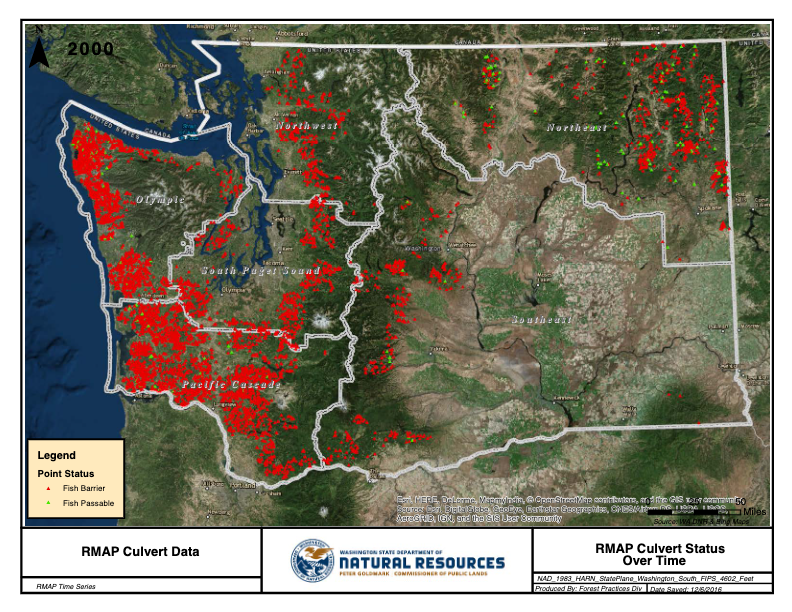
Our commitment to preserving Washington’s aquatic habitat is at the heart of our efforts to revamp forest roads and culverts. With nearly 53,000 miles of forest roads inventoried and enhanced on state and private lands, we’ve embarked on a transformative journey to restore fish habitat. Through these initiatives, we’ve successfully removed or replaced over 8,100 stream blockages, effectively opening up nearly 6,200 miles of fish habitat.
ROAD MAINTENANCE AND ABANDONMENT PLANS (RMAPS)" protecting aquatic habitats
The responsible stewardship of our forests hinges on embracing innovative road and culvert construction practices. Washington’s Forests & Fish Law has spearheaded this transformation through Road Maintenance and Abandonment Plans (RMAPs). Forest landowners, both large and small, have systematically submitted 256 RMAPs and 18,804 RMAP checklists, collectively covering almost 53,000 miles of forest road.
The results speak volumes: more than 6,500 miles of vital fish habitat have been reclaimed by addressing over 9,200 stream blockages. As a significant investment in Washington’s natural resources, we’ve committed $390 million to state and private land improvements, safeguarding the future of our precious environment. To delve deeper into this initiative, explore the Forests & Fish Law.
Prioritizing the "Worst First" for Improved Road Maintenance
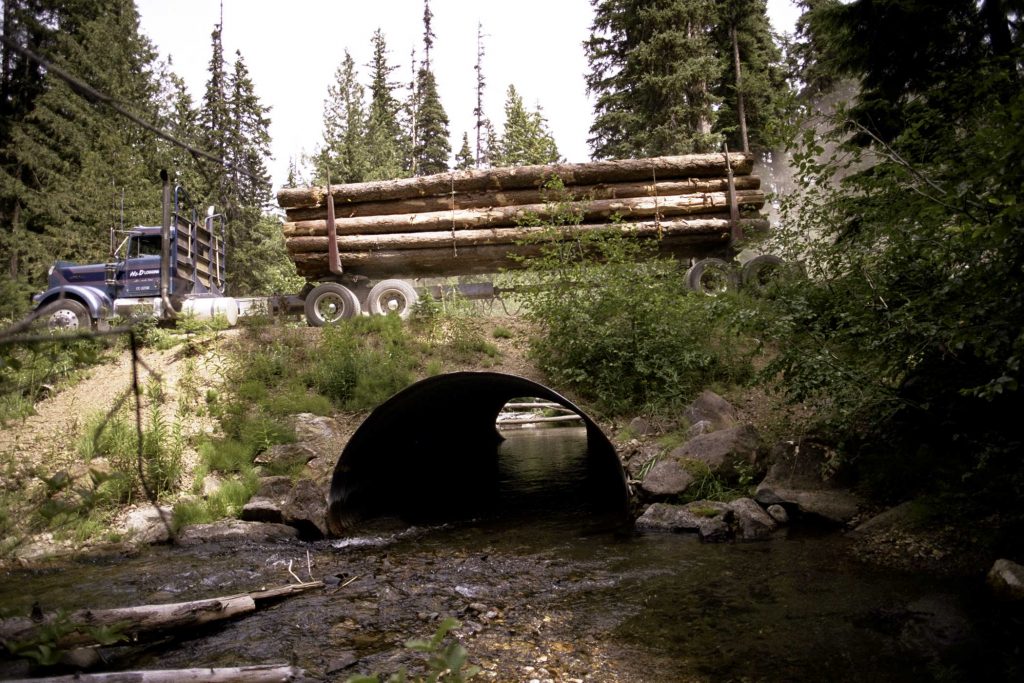
A cornerstone of our responsible forest management lies in adopting new methods for road and culvert construction, with a focus on “worst first” priorities. Forest landowners, industrial and non-industrial alike, are mandated to submit RMAPs to the Department of Natural Resources (DNR). These plans ensure proper abandonment or stabilization of unused forest roads and elevate the standards for constructing new ones.
By mitigating runoff and reducing sediment discharge into streams, our improved road maintenance practices safeguard water quality and fish habitat. Our commitment extends to disconnecting road drainage from streams and eliminating artificial structures obstructing fish passage.
Tailored Strategies for Unique Watersheds
Adaptive Management guides us in tailoring RMAP strategies to meet the distinct needs of each watershed. The Forests & Fish Law, aims to prevent catastrophic downstream flooding of forest roads during heavy rains. To achieve this, we enlarge culverts and bridges, employ new road construction techniques, and re-engineer risky culverts and stream passages to withstand 100-year floods.
Innovative practices include constructing roads across streams at perpendicular angles to minimize sediment input. We divert runoff from ditches onto the forest floor using new cross-drain techniques and employ sediment traps to halt sediment before it reaches our precious streams. Different strategies are applied when grading or sloping roads, ensuring efficient drainage and minimal environmental impact.
Supporting Small Family Forest Landowners
Recognizing the financial impact of RMAPs on small family forest landowners, the Washington Legislature passed House Bill 1095 in 2003, creating the Family Forest Fish Passage Program. This program offers up to 100% funding and assistance to eliminate fish-blocking structures. Since its inception, 433 barriers have been removed, reconnecting 1,149 miles of fish habitat.
Why Restricting Harvesting on Steep Slopes Saves Fish Habitat