
WASHINGTON FOREST PROTECTION ASSOCIATION
CONTROLLING ANIMAL DAMAGE TO YOUNG, HEALTHY TREES
Animal damage poses a significant economic challenge to private forest landowners in Washington, leading to millions of dollars in losses each year.
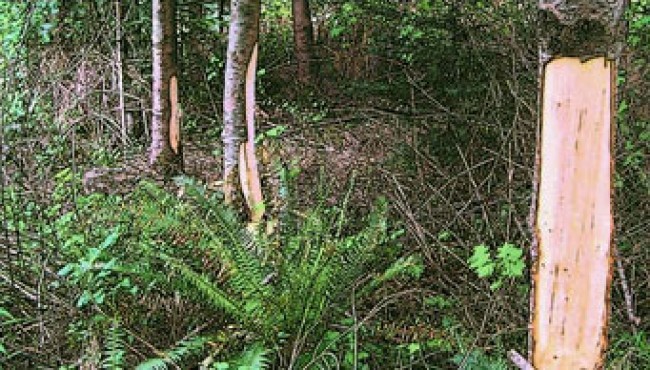
Animal damage occurs when animals, such as bears, porcupines, beavers, mountain beavers, deer, and elk, forage for food and harm healthy trees. Among these animals, black bears are the primary culprits, with a single foraging black bear capable of stripping bark from as many as 70 young trees in a day as they seek the inner layer of the tree trunk. This damage leaves trees aged 15 to 25 years vulnerable to insect infestations and diseases.
Most animal damage takes place in early spring when bears emerge from their dens, and natural food sources are scarce. In Washington State, Douglas-fir, western hemlock, and western red cedar are the tree species most targeted by black bears. To mitigate tree damage, forest managers in Washington are actively monitoring bear populations and exploring alternative food sources.
Supplemental Feeding Program as the Primary Control Method
Collaboration among private, government, and tribal forestland managers in Washington and Oregon has led to the development of a supplemental feeding program designed to meet the dietary needs of foraging black bears. Historically, lethal methods were the preferred choice for animal damage control. However, since 1985, members of the Animal Damage Control Program (ADCP) have made the supplemental feeding program their primary approach to damage control. Annually, over half a million pounds of feed are distributed across more than 900 feeding stations in Washington and Oregon. Research has demonstrated that providing an alternative food source during the critical spring months resulted in six times less damage in treated stands compared to areas without supplemental food. Forest managers also have other options at their disposal, including fencing, repellents, introducing alternative native plants, and relocating bears to different areas.